

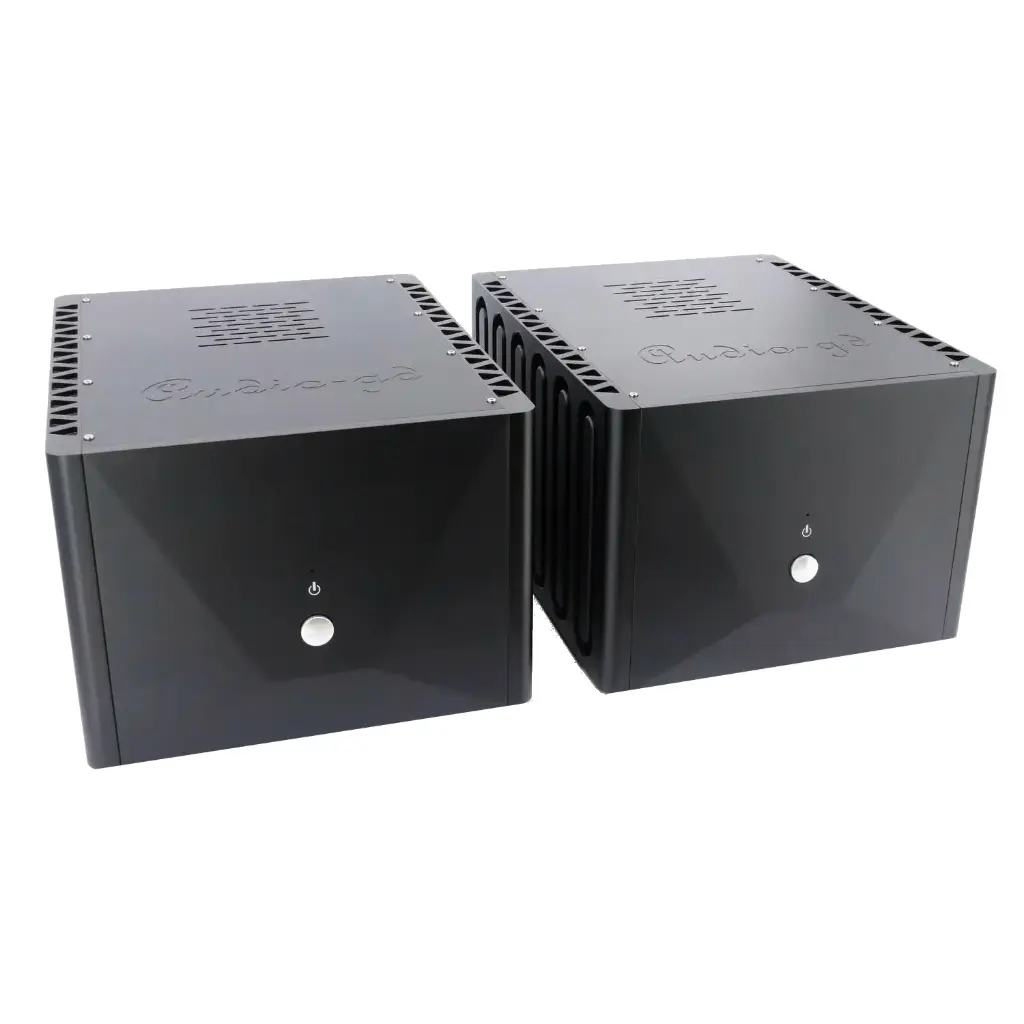


Audio-GD - MASTER 2 MK3 - Class-A Balanced Mono Power Amplifiers (XLR, ACSS)
MASTER 2 MK3 30 Watt CLASS-A Mono Balanced Power Amplifiers
Experience pure emotion and control with the Audio-GD Master 2 mk3 mono Class-AB power amplifier!
30W pure class A , 250W class A at 8 ohm , 1000W at 2 ohm per channel.
Linear Fidelity non-feedback (NFB) output stages bring your music alive with natural dynamics.
80x Motorola ONsemi power transistors and soft start design ensure powerful, reliable performance.
| Brand: Audio-GD |
| Product Type: Power Amplifiers |
Audio-GD Master 2 mk3 - Mono Power Amplifiers
Fully balanced design with Class A gain and pre-driver stages, using discrete analog circuits without OPAs or coupling capacitors in the signal path. The output stages feature superb linearity, delivering 100W of pure Class A power per channel. Equipped with two analog inputs (XLR and ACSS) for flexible system integration. Utilizes 80 ON Semiconductor transistors (15A/230W each) and supports 30W x2 (8Ω) pure Class A, with maximum outputs of 250W x2 (8Ω) and 1000W x2 (2Ω). Features 260,000uF total capacitance, dual toroidal and four R-core transformers (total 1800W), with independent power supplies for each channel. Four high-quality Class A parallel PSU groups power the gain stages.
Selectable 20dB and 26dB gain modes on the rear for easy matching with both high- and low-sensitivity speakers.
MAINS DC FILTER (OPTIONAL)
The mains should provide pure AC voltage of 230 volts, but that is not always the case, one problems with mains is the DC offset. The new built-in DC Blocker will filter and correct this up to a maximum of 1.2 Volt which is sufficient for the mon power amps. Buzzing of the transformers will be minimized.
INPUTS
- 1. XLR
- 2. ACSS (XLR 4-PIN )
OUTPUTS
- Speaker Neutrik output IEC sockets.
“Linear Fidelity” technology
The Master 2 features specially designed output stages with “Linear Fidelity” technology. These output stages operate without negative feedback while maintaining exceptionally low distortion and superb linear performance. In many power amplifier designs, output power directly influences distortion levels, and even at a specific output level, distortion can vary significantly across the frequency spectrum.
For example, the blue line below shows the frequency response at 20W into 8 ohms of a well-known USD $10,000 power amplifier, illustrating these variations.
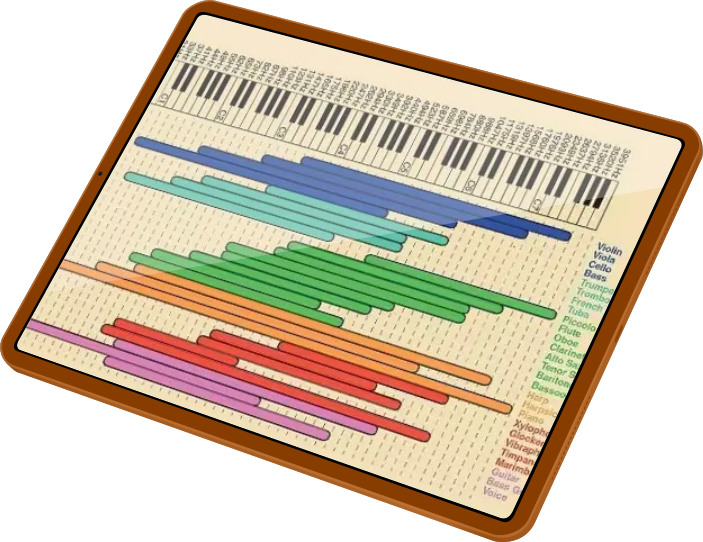
Different types of distortion also shape how we perceive sound. When listening to a piano, you can hear the difference between brands because of the unique distortion characteristics across the frequency range. The more lifelike the reproduction and the more faithfully these subtle distortions are preserved, the more clearly you can perceive the differences between a brand A piano and a brand B piano.
NON-FEEDBACK DESIGN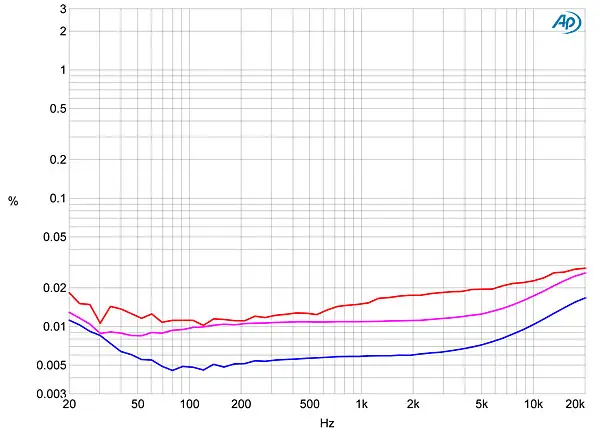
Negative feedback is typically applied in amplifiers to reduce distortion. However, while it lowers measured distortion, it can also make listening less natural and engaging. Additionally, amplifiers with negative feedback often perform well on test benches with ideal loads, but when connected to real speakers, interactions through the feedback loop can introduce additional distortion.
While negative feedback reduces distortion, it often causes distortion to rise with output power, making dynamic music sound aggressive and fatiguing during listening.
Traditionally, non-negative feedback designs are known for higher distortion and are difficult to control, especially in driver and output stages operating under high current. In the Master 2, however, we use ACSS technology in the gain stages, achieving a no negative feedback design while retaining the advantage of very low distortion for a more natural, lifelike musical presentation.
SPECIFICATIONS
S/N Ratio | >110DB |
Gain | +20DB and +26 DB for selection |
Output | >250W @ 8ohm |
Input sensitivety | 2.2V RMS @ XLR |
Input impedance | 94K ohm @ XLR |
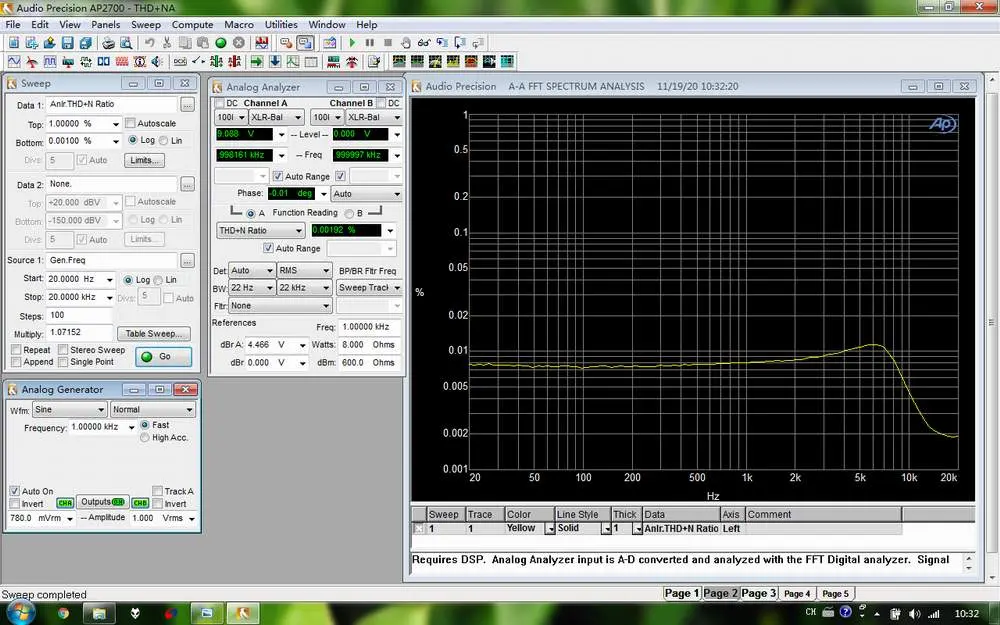
| THD+Noise | THD+N at 8 ohm 10W
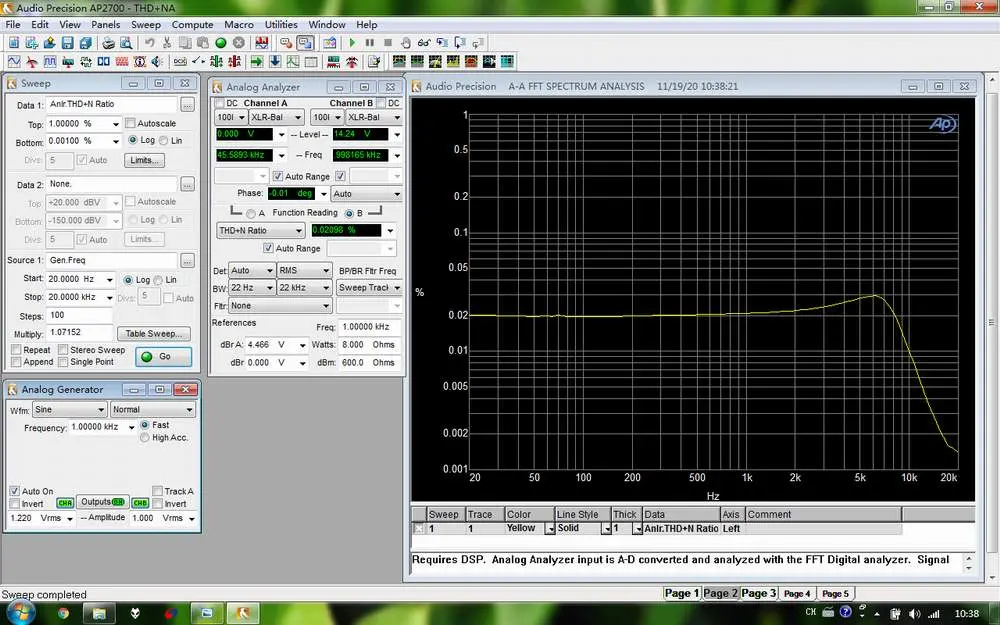
THD+N at 8 ohm 25W
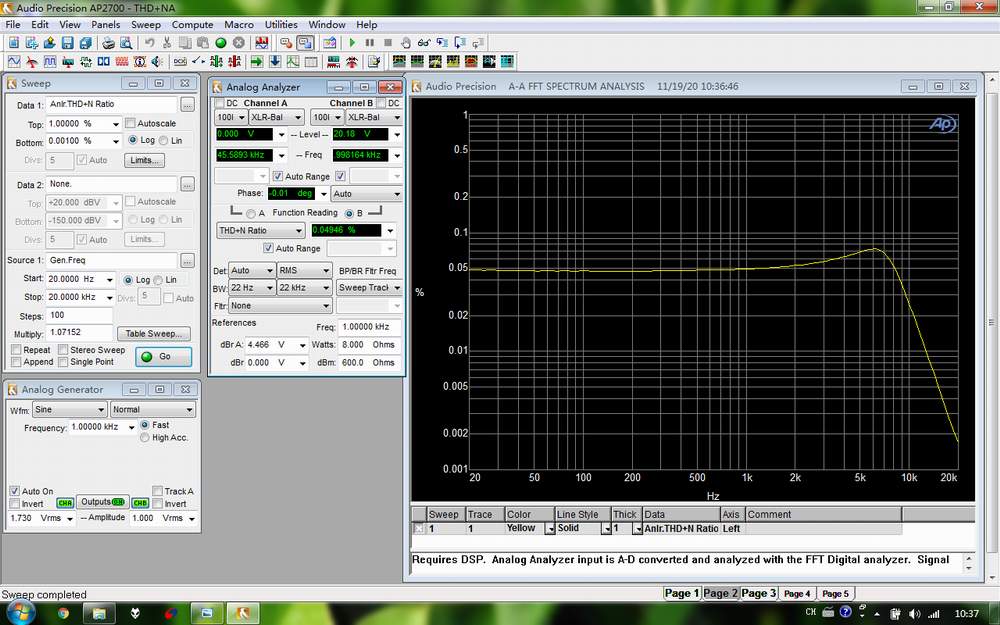
THD+N at 8 ohm 50W
|
Frequency Breadth (ACSS input) | 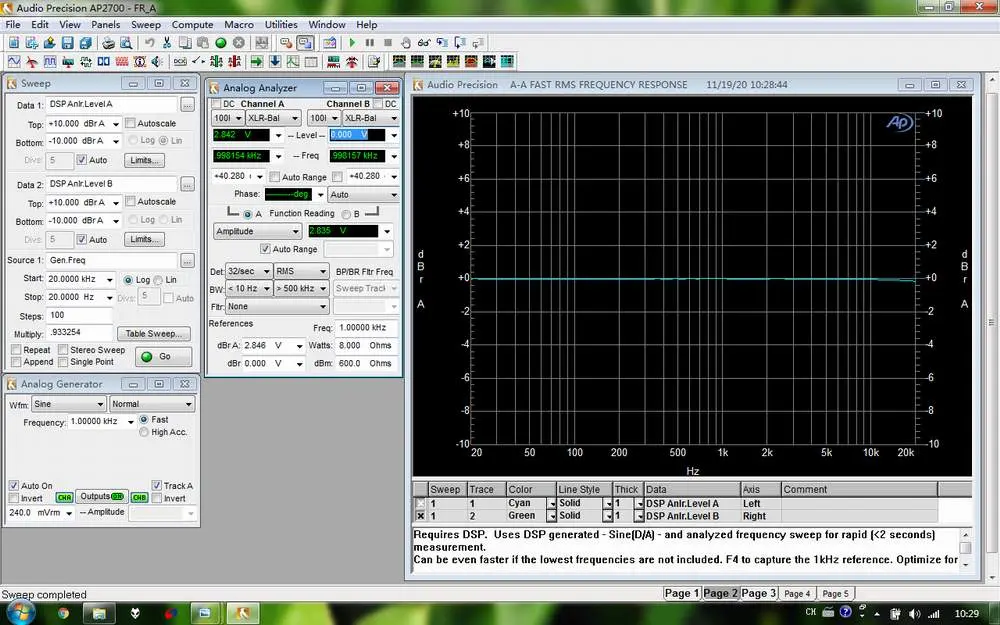 |
| Channels cross | Mono |
| Channels imbalance | < 0.01DB |
Power Requirement | 1 Version 100-120V AC 50/60 Hz 2 Version 220-240V AC 50/60 Hz |
Power Consumption | 250W static @230V (Two units) |
Transformer Power | 1800W (4 transformers) |
Package Weight | Approximately 82KG |
| Dimensions | Every unit : W(360) H(270) D(457) (MM, Fully aluminium ) |
Accessories | Power cord X2 |